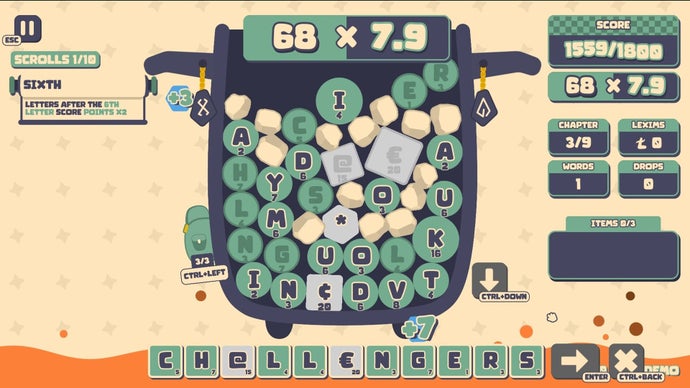
Lexispell launches as a Balatro-inspired roguelike that swaps poker mechanics for spelling bee gameplay. The deck-building framework remains intact, but instead of constructing card combinations, players build words from letter tiles and manage strategic runs without relying on gambling systems.
Balatro's massive success spawned a flood of imitators across genres. Vampire Survivors, Buckshot Roulette, and Lethal Company all generated derivative titles within months of their popularity peaks. Balatro clones specifically range from thoughtful reinterpretations to games that embrace gambling mechanics outright, treating luck-based systems as core features rather than ethical concerns.
Lexispell takes a different approach. By anchoring gameplay around word construction rather than card luck, the indie title removes the gambling layer entirely while preserving Balatro's addictive meta-progression and run-based structure. Players strategically select letters across successive rounds, building increasingly complex words to generate power and advance toward victory conditions.
The move reflects growing developer awareness around Balatro's cultural impact. The roguelike deckbuilder proved that players crave high-stakes, strategic decision-making wrapped in compelling progression loops. What players actually want from that formula varies. Some prefer pure chance elements. Others, like Lexispell's developers, recognize the core appeal isn't gambling at all. It's the constant pressure of limited options forcing meaningful choices.
Spelling bees naturally align with this philosophy. Word games demand active player skill rather than card draw luck. Lexispell targets players who love Balatro's framework but rejected its reliance on randomization and probability manipulation. This positions the game in an underserved niche. Balatro imitators typically doubled down on gambling aesthetics. Lexispell inverts that, offering strategic depth without the psychological hooks that push players toward risk-taking.