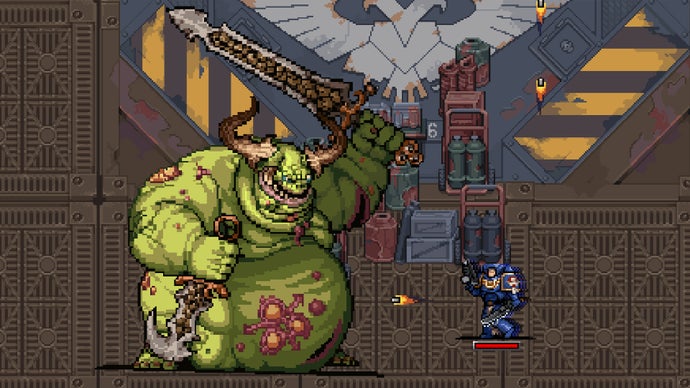
Warhammer Survivors takes the bullet heaven formula pioneered by Vampire Survivors and introduces a squad-based twist that fundamentally alters how players approach the genre's core chaos. Instead of controlling a lone survivor against endless enemy waves, players build and manage a small squad of allied characters who act independently on the battlefield.
This departure from the single-character model adds layers of unpredictability. Each squad member fights autonomously, making tactical decisions and weapon pickups feel less like direct character optimization and more like building a functional team. When you grab a weapon drop, it equips one of your squad members rather than enhancing your personal arsenal. This creates meaningful decisions around team composition and loadout distribution.
The game retains the hallmark bullet heaven experience: thousands of enemies flooding the screen, screen-filling visual spectacle, and the satisfying feedback loop of growth and progression. Warhammer's universe provides thematic flavor, though the mechanical innovation lies in the squad system rather than setting-specific mechanics.
Vampire Survivors defined the modern bullet heaven template and spawned numerous imitators. Most follow Poncle's blueprint directly. Warhammer Survivors distinguishes itself by addressing one of that formula's weaknesses: the single-character perspective can feel limiting during intense late-game scenarios where screen clutter reaches overwhelming levels. A squad distributes both visual noise and mechanical responsibility.
The independent squad AI also raises interesting design questions. Players can't micromanage allies, forcing them to trust their team's survival instincts. This creates a different difficulty curve than traditional bullet heavens where player skill directly determines survival.
Warhammer Survivors launches into a crowded subgenre, but the squad mechanic offers genuine mechanical differentiation rather than cosmetic theming. Whether this innovation sustains engagement across a full campaign depends on execution and progression pacing. The chaos the developers reference becomes more interesting