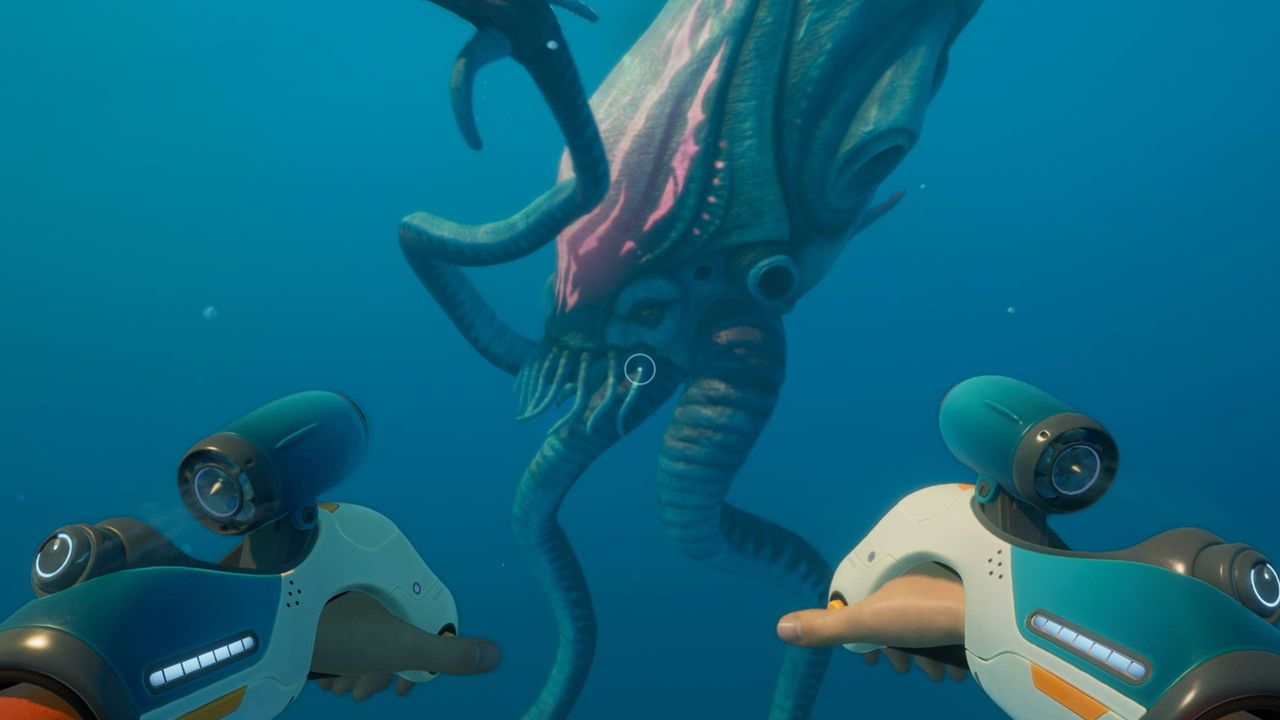
Subnautica 2 rewards players for scanning marine life with Biomods, an upgrade system that grants passive and active abilities. Biomods function as a core progression mechanic, allowing you to customize your character's capabilities by collecting genetic data from the game's diverse fauna.
The system works straightforwardly. Scan fish and other creatures to unlock their associated Biomods. Each Biomod provides distinct advantages. Some enhance oxygen consumption efficiency, critical for extended underwater exploration. Others boost movement speed, reduce pressure damage, or grant special abilities like bioluminescence for navigating dark ocean zones.
Biomods tie directly to Subnautica 2's exploration loop. Early game scanning of common species yields basic utility upgrades. Deeper biomes demand rarer creature scans to unlock specialized Biomods needed for survival in extreme pressure or toxic environments. This creates natural progression gates without forced storyline restrictions.
The design encourages environmental engagement. Players must venture into different biome types, locate specific creatures, and successfully scan them. A single missed scan means returning to that area later. The system rewards curiosity and thorough exploration while avoiding punishment mechanics.
Subnautica 2 balances power progression with accessibility. No Biomod feels mandatory for basic survival, but strategic selection matters for tackling specific challenges. Speedrunners might prioritize movement Biomods, while explorers benefit from oxygen efficiency upgrades.
The franchise's DNA modification concept returns refined. The original Subnautica featured a similar system, but Subnautica 2 expands the roster and integrates Biomods more tightly into equipment crafting and base building. Players can swap Biomods between dives, allowing flexible approaches to different exploration goals.
This progression system differentiates Subnautica 2 from survival games relying purely on resource gathering. Biom