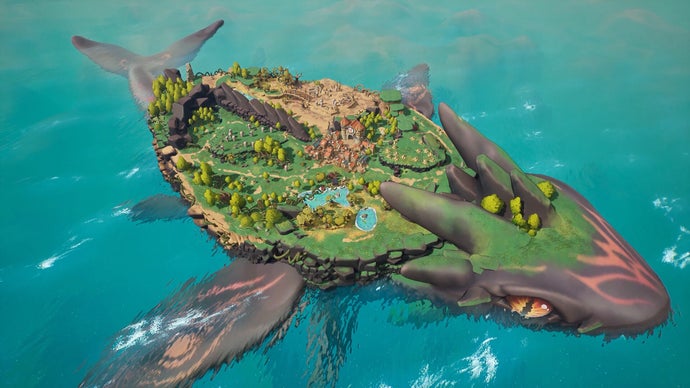
KingFish splits the difference between two seemingly incompatible genres. One player commands city-building mechanics while the other handles real-time combat in this asymmetrical co-op roguelike.
The game targets a specific player pairing: friends who gravitate toward different game types. One prefers city management systems and infrastructure puzzles. The other wants sword swings and enemy encounters. KingFish gives both players what they want simultaneously, forcing them to cooperate despite pursuing fundamentally different gameplay loops.
This asymmetrical approach echoes titles like Overcooked or A Way Out, which succeed by giving partners distinct roles with interdependent outcomes. In KingFish, the builder likely influences resources, defenses, or mission parameters for the action player, while the action player gathers materials or protects structures the builder relies on. Neither role works solo.
The roguelike structure adds run-based progression. Both players fail or succeed together, meaning a skilled builder can't carry a weak fighter, and vice versa. This forces balanced skill development across both playstyles.
Indie developers increasingly explore asymmetrical co-op because it solves a real multiplayer problem: not everyone enjoys the same games. Standard co-op requires both players to accept one genre. KingFish lets them play their preferred style while maintaining genuine interdependence.
The market for experimental co-op remains solid but niche. It attracts players burned out on competitive multiplayer and those seeking shared experiences with specific people. KingFish positions itself as a bridge title, making city builders accessible to action fans and proving co-op action games need management depth.
Whether KingFish succeeds depends on execution. The builder role must feel genuinely impactful, not like a glorified assistant position. The action player's gameplay needs weight and challenge. Poor balance tips into frustration where one role domin