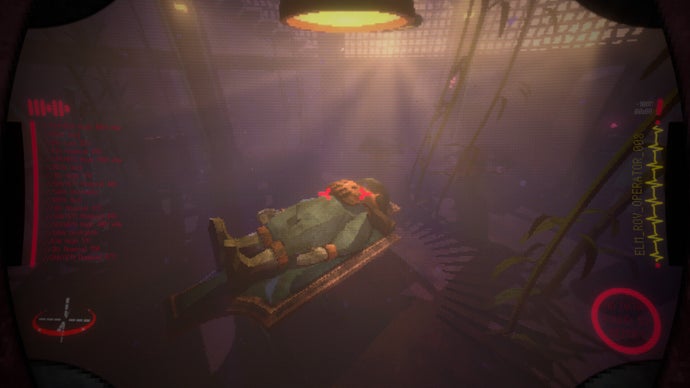
KEROGEN joins the lineup of ocean-horror games that trade on humanity's primal fear of the deep. The game tasks players with piloting a deep-sea vessel and retrieving bodies and wreckage from an oil-contaminated abyss. The premise draws explicit comparisons to SOMA, BioShock, and Iron Lung. those titles have established underwater settings as fertile ground for psychological horror.
The game's core mechanic involves descending into dark waters to scavenge corpses and debris from what the game describes as "an oil-drenched nightmare." This strips away any pretense of sanitized salvage operations. Players confront the visceral reality of death in the deep.
Ocean-based horror works because the setting triggers legitimate human anxiety. The water is vast, dark, and fundamentally unknowable. Games like SOMA proved that submersible environments create claustrophobia and isolation in equal measure. The player sits in a confined vessel while unknown threats lurk outside. Iron Lung refined this formula with minimalist presentation. KEROGEN appears to lean into the grotesque body-recovery aspect, making the horror less abstract and more visceral.
The industry's recent embrace of ocean horror reflects broader shifts in horror game design. Rather than relying on jump scares or combat encounters, these titles weaponize atmosphere and player psychology. BioShock's underwater city became iconic partly because the ocean setting amplified every sense of wrongness. SOMA took that further, stripping away combat entirely and forcing players to confront existential dread while trapped underwater.
KEROGEN's entry into this space suggests developer interest in deep-sea settings remains strong. The game targets players who found SOMA's psychological horror effective and want more content in that vein. Recovery and retrieval missions offer narrative hooks that transcend typical survival mechanics. Finding corpses raises questions. Who were these people?