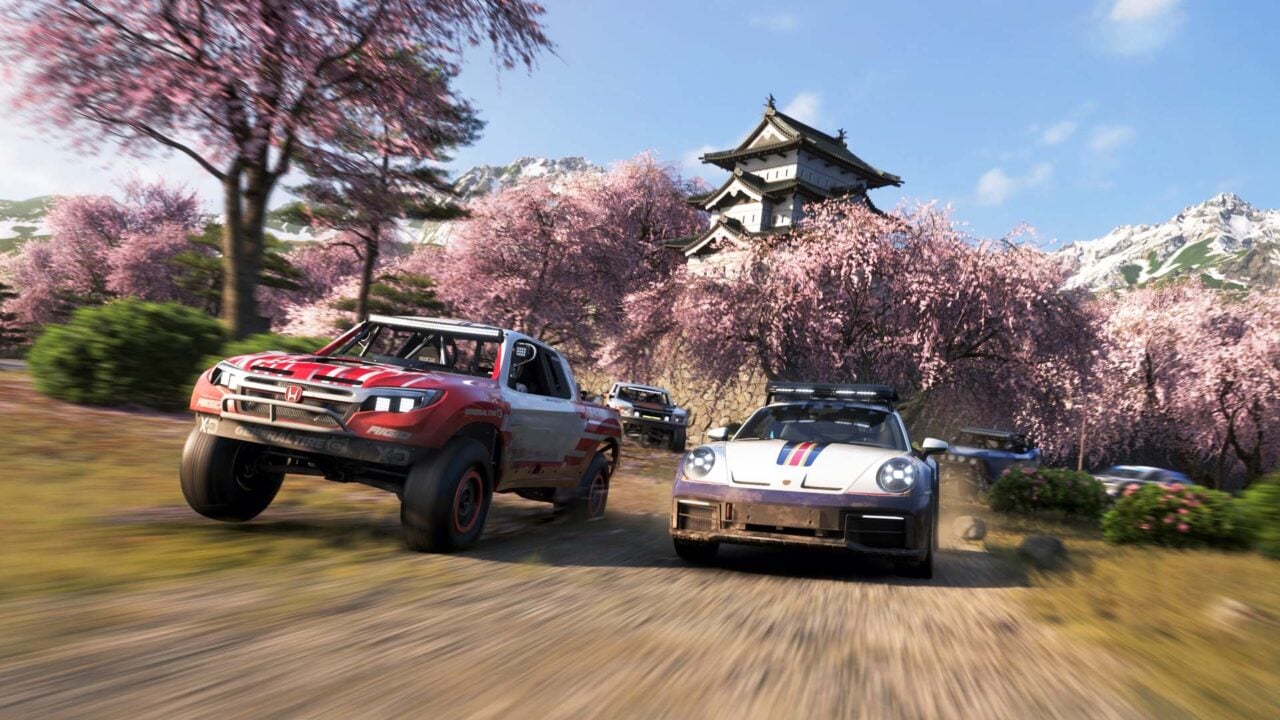
Playground Games made a deliberate design choice for Forza Horizon 6. Cherry blossom trees in the game's Japanese locations cannot be destroyed or damaged during gameplay, unlike nearly every other environmental element. The developer cited cultural significance as the reason.
"They're an iconic element of Japanese culture," a Playground Games spokesperson explained. The trees remain pristine whether players crash into them, drive through groves, or use the environment as part of race tracks. This treatment separates cherry blossoms from destructible fences, walls, and vegetation that typically populate Forza Horizon's open worlds.
Forza Horizon 6 launches on Xbox Series X/S and PC, continuing the racing franchise's tradition of highly detailed, interactive environments. The series built its reputation on physics-based destruction and dynamic world interaction. Vehicles leave skid marks, collisions damage barriers, and races frequently tear through carefully constructed landscapes.
The cherry blossom decision reflects broader industry conversations about cultural representation and respect. Rather than treat Japan's most recognizable flora as mere set dressing, Playground Games elevated their status. The move demonstrates awareness that certain cultural symbols deserve different handling than generic environmental props.
This approach mirrors how other games handle specific cultural or religious imagery. Respecting cultural touchstones without diminishing gameplay remains a delicate balance. Forza Horizon 6's solution protects iconic elements while maintaining the destruction-heavy gameplay loops players expect from the series.
The cherry blossom trees exist throughout Japan's regions in the game. Players will navigate around them during races and exploration, creating natural obstacles that feel organic to the setting rather than artificial gameplay restrictions. This integration preserves both cultural authenticity and mechanical integrity.
Playground Games' choice sends a message about thoughtful localization. When racing games arrive in new regions, they can either flatten cultural identity into generic backdrops or celebrate what makes each