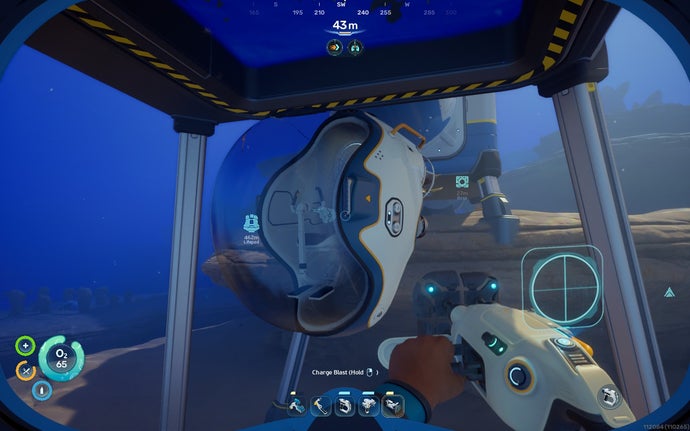
Subnautica 2 launched into early access today, and after seven hours with the sequel, it reads more as a spiritual successor than a direct continuation. Unknown Worlds Entertainment strips away unnecessary complexity from the original 2014 survival hit and doubles down on what worked: underwater exploration wrapped in existential dread.
The setup mirrors SOMA more than its predecessor. Players crash-land as a space colonist, then wake up inside a 3D-printed body created by Noa, a corporate AI with paternalistic tendencies. This narrative framing adds psychological weight that the original Subnautica lacked. The core loop remains intact—craft, explore, survive—but the execution feels refined rather than revolutionary.
Early access impressions highlight a game that strips survival mechanics to their essence. Gone are some of the franchise's grindier systems. In their place sits a tighter focus on ocean exploration and resource gathering that flows naturally into progression. The underwater environments pull players forward through curiosity rather than checklist completion.
The sequel leverages improved technology to deliver denser visuals and more cohesive level design. Bioluminescent creatures glow with purpose. Wrecks tell stories through environmental storytelling. Subnautica 2 respects player intelligence, dropping exposition in favor of discovery.
However, early access status signals obvious gaps. Content breadth remains limited compared to what the full release will offer. Progression plateaus quickly. The sequel needs more biomes, more creatures, and more reasons to venture deeper.
What matters here is trajectory. Unknown Worlds clearly learned from the original's five-year early access grind. The foundation feels solid. The vision—a meditation on ocean exploration that treats human consciousness as another resource to be exploited—lands harder than Subnautica's straightforward survival premise.
For players burned out on crafting simulators