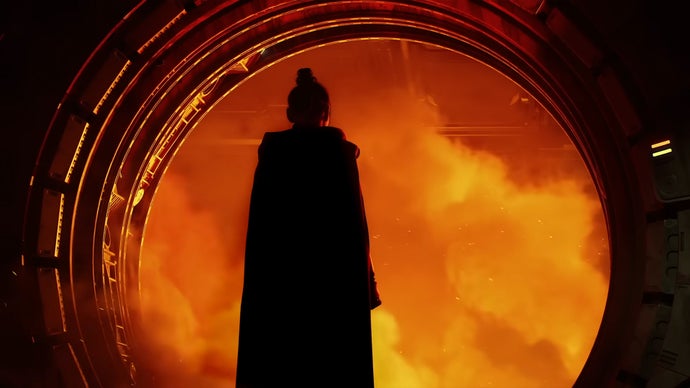
Casey Hudson, the veteran director behind Mass Effect and Knights of the Old Republic, is steering clear of AI in Star Wars: Fate of the Old Republic. Hudson stated plainly that he finds "AI to be creatively soulless," rejecting the technology that's become a flash point across the industry.
The spiritual successor to KOTOR launched with a CG teaser in December, positioning itself as a narrative-driven RPG rather than a cash grab or trend-chasing project. Hudson's explicit stance on artificial intelligence signals the studio's commitment to human-crafted storytelling and creative direction, a deliberate choice that contrasts sharply with other major publishers experimenting with AI for dialogue, asset generation, and design assistance.
Hudson built his reputation on dialogue-heavy, choice-driven experiences. Mass Effect's branching narratives and companion relationships defined the franchise, while KOTOR remains a benchmark for Star Wars storytelling in gaming. That pedigree matters here. Players burned by service games and AI-generated content are hungry for authentic creative vision. Hudson's rejection of the technology reads as both philosophical stance and market positioning.
The KOTOR spiritual successor exists in a crowded space. Baldur's Gate 3 proved players crave deep roleplaying and meaningful choice. Smaller studios like Obsidian Entertainment have thrived on dialogue-first design. Meanwhile, major publishers racing toward AI integration risk alienating audiences fatigued by soulless live service mechanics and corporate sanitization.
Hudson's comment arrives at a moment when the industry divides sharply on AI. Some studios tout efficiency gains. Others face backlash from writers and artists concerned about job displacement and creative integrity. His clarity positions Fate of the Old Republic as a counter-narrative: a big-budget Star Wars game betting on human craftsmanship over technological shortcuts.
We know almost nothing concrete about the game itself yet.