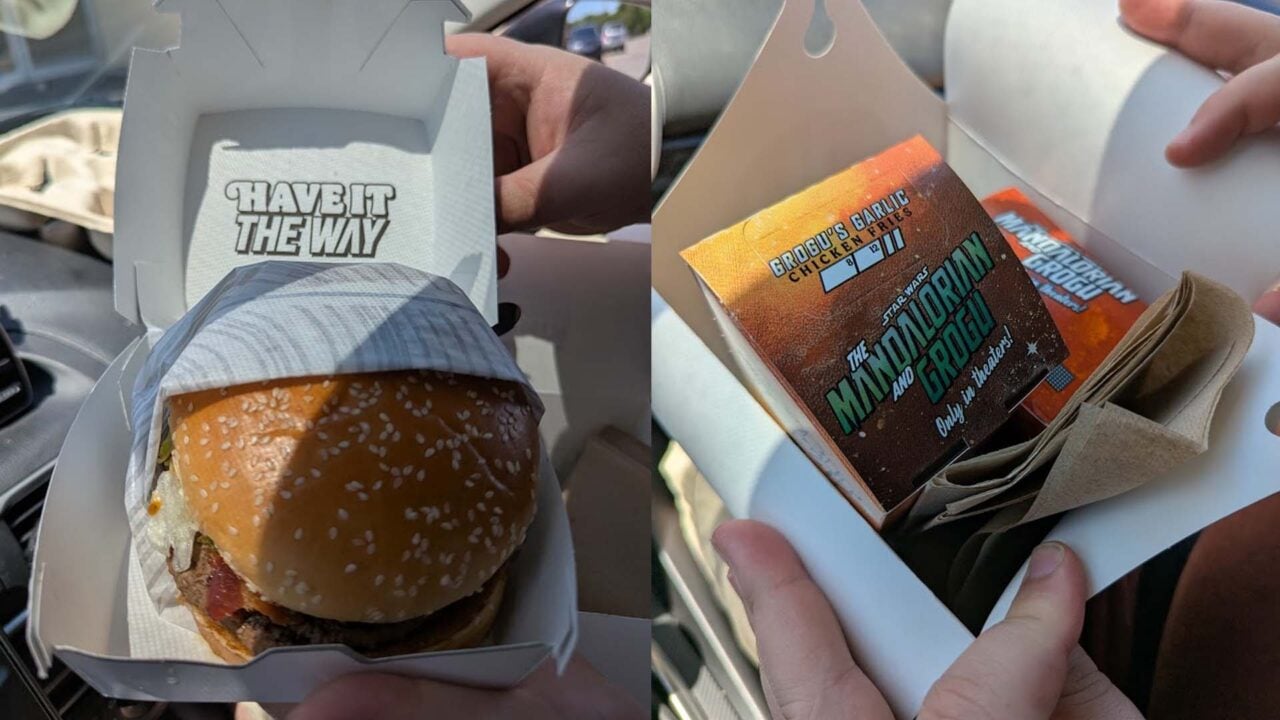
Burger King's latest licensed meal tie-in puts Star Wars branding on a fast-food combo, creating an awkward collision between blockbuster franchising and quick-service dining. The chain partnered with Lucasfilm to slap Mandalorian and Grogu imagery onto a standard meal package, complete with themed packaging and collectible elements designed to drive foot traffic.
The experience proved genuinely uncomfortable for the reviewer. Walking into a Burger King specifically to order a Star Wars meal carries social friction. Adults buying licensed character meals face implicit judgment. The packaging feels overwrought for what amounts to a cheeseburger, fries, and drink. Yet despite the cringe factor, the actual food delivered competent quality. The burger tasted fresh. The fries hit expected standards. Nothing tasted like a stunt.
This reflects a broader fast-food strategy. Major chains exploit entertainment properties to create temporary sales spikes. Disney, Marvel, and now Star Wars properties drive repeat visits through nostalgia and collectibility rather than culinary innovation. Burger King joins McDonald's, Wendy's, and others in treating meals as promotional vehicles for film and television franchises.
The Star Wars meal works as marketing. Fans generate social media content. Collectors seek out complete sets. Parents buy extras for kids. The combination of accessible food quality and cultural IP creates low-stakes transaction appeal. Nobody expects a Michelin experience from Burger King's Star Wars offering. The expectation centers on novelty and nostalgia value.
The reviewer's self-aware discomfort captures modern fandom reality. Consuming licensed content involves embracing some embarrassment. Grown adults order character meals. They collect packaging. They photograph items for Instagram. The shame exists separate from genuine enjoyment. Both feelings coexist.
Burger King's Star Wars meal succeeds because it understands its purpose.