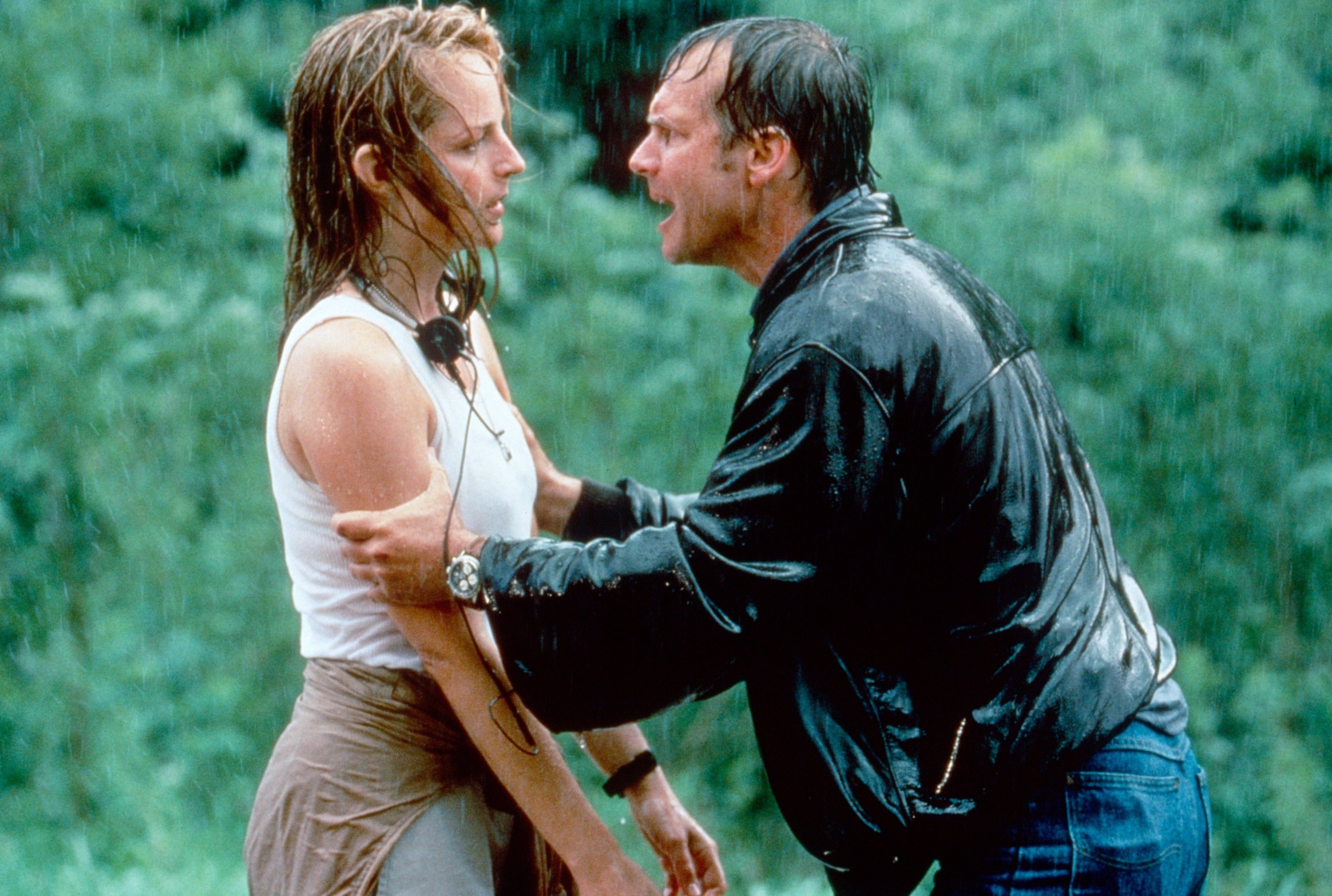
Warner Bros. drops Twister from HBO Max next month, yanking a Spielberg-produced disaster film that fundamentally reimagined how Hollywood treats natural catastrophes. Director Jan de Bont and writer Michael Crichton crafted the 1996 film as a monster movie masquerading as a tornado thriller, where twisters function as unstoppable antagonists rather than random acts of nature.
The film applies Jurassic Park logic to meteorology. Just as Crichton's dinosaurs represented forces humans cannot control, Twister's tornadoes become intelligent obstacles. Storm chasers Bill Paxton and Helen Hunt pursue these phenomena like hunters tracking prey, equipped with specialized technology to study and survive encounters with these creatures. The film treats tornado formation and behavior with the same dramatic weight reserved for a T-Rex attack sequence.
This approach proved influential. Twister earned $494 million globally and established the tornado blockbuster as viable entertainment. The film prioritized spectacle and character tension over scientific accuracy, leaning into practical effects and disaster set pieces that influenced action cinema throughout the late 1990s and 2000s.
HBO Max loses the title as content licensing agreements expire. The removal reflects ongoing streaming consolidation, where studios rotate catalog films between platforms based on contract terms and profit calculations. Twister will likely migrate to another service or return to cable rotation, though its departure from HBO's flagship platform signals shifting priorities in content strategy.
The film's legacy endures beyond its HBO presence. Twister spawned a 2024 sequel on Netflix, which continued the monster-movie approach to natural disasters. That continuation proves Crichton and de Bont's core concept remains commercially viable. Modern disaster films increasingly borrow this framework, treating environmental threats as story antagonists rather than mere backdrops.