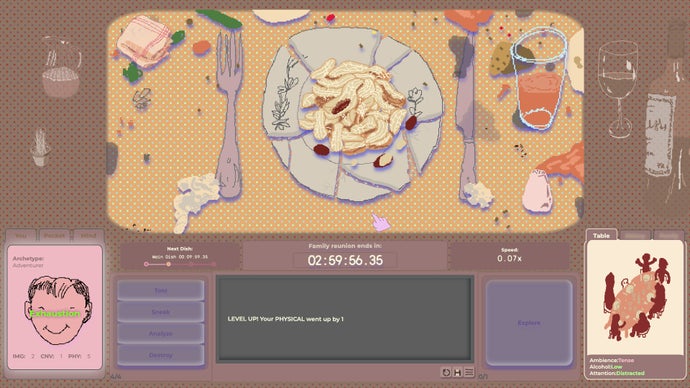
Family Reunion drops players into a chaotic dinner table simulator where they control a bored 7-year-old navigating the awkward tedium of a family meal. Developer Waibinin crafted this time-attack adventure around a simple concept: survive the gathering by keeping yourself entertained while adults drone on about nothing.
The game nails its aesthetic. Hand-doodled visuals mimic child-level drawing skills, creating genuine charm through intentional imprecision. This visual identity immediately sets the tone and separates Family Reunion from polished indie darlings cluttering Steam.
Gameplay prioritizes discovery and experimentation. You'll interact with dinner table objects, move around the space, and find ways to amuse yourself through increasingly absurd scenarios. The time-attack structure creates pressure, forcing choices about what deserves attention during a finite window. Do you poke the mashed potatoes or investigate that weird aunt's purse? Every second counts.
The demo launched on Itch and Steam, giving players immediate access to the full concept. Initial reception highlights how Family Reunion captures something authentic about childhood boredom. It's not just nostalgia marketing. The game genuinely recreates that specific mental state where minutes feel like hours and mundane objects become fascinating simply because they're there.
This positions Family Reunion in the growing space of "mundane simulator" indie games. Titles like A Short Hike and Unpacking proved audiences want games about ordinary moments treated with genuine care and humor. Family Reunion extends that formula into childhood experience specifically, territory few games explore with this much sincerity.
The hand-drawn presentation costs nothing but artistic commitment, which matters. Waibinin chose style over processing power, resulting in something immediately recognizable and memorable. In an oversaturated market, that choice matters.
THE TAKEAWAY: Family Reunion proves you don't need