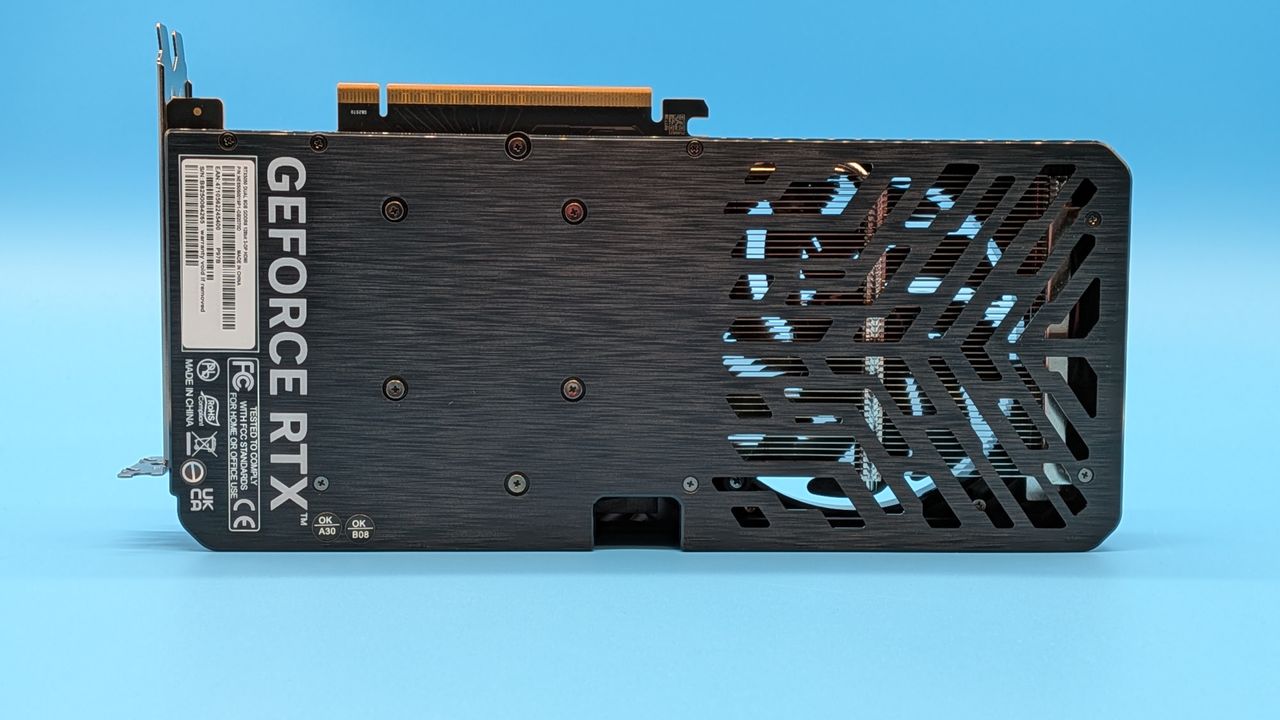
Nvidia's RTX 5050 arrives in Palit's Dual edition as the GPU market's strongest budget option, despite lingering frustrations with the budget segment. The card targets 1440p gaming at high settings and light content creation work without demanding a full system rebuild.
Palit's cooler design keeps thermals reasonable under sustained loads. The Dual edition sits between reference and premium variants in both price and performance stability. Memory bandwidth limitations show up in demanding titles like Black Myth Wukong and Avatar Frontiers of Pandora, where the card struggles to maintain 60fps at maximum settings. DLSS 3 and frame generation partially offset these gaps.
For esports titles, the RTX 5050 delivers solid frame rates. Valorant, CS2, and Apex Legends run well above 100fps at 1440p with high settings enabled. This makes the card viable for competitive players on tight budgets.
The frustration stems from Nvidia's positioning. The RTX 5060 sits close enough in price that buyers often stretch budgets toward better value. VRAM matters here. The 5050 ships with 8GB while the 5060 offers 10GB, creating a meaningful gap for future-proofing. Palit's Dual cooler doesn't fully compensate for the memory deficit against competing AIB models.
Power efficiency remains a strong suit. The 90W TDP means existing PSUs rarely need upgrades. This separates the 5050 from AMD's competing RX 5070, which demands more power headroom.
Ray tracing performance lags behind rasterization more noticeably on the 5050 than higher-tier cards. Enabling ray tracing in modern AAA games forces quality compromises. DLSS upscaling becomes almost mandatory rather than