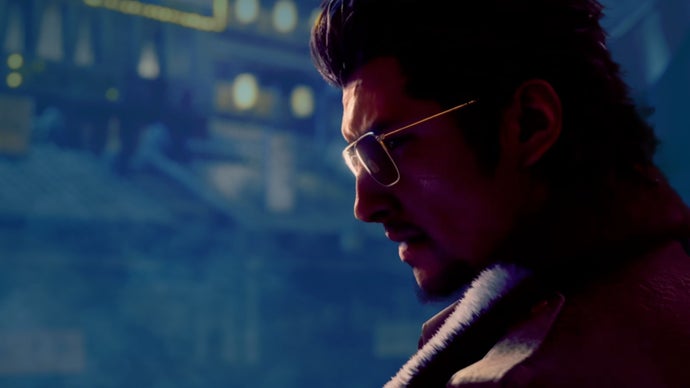
Ryu Ga Gotoku Studios unveiled its upcoming historical drama Stranger Than Heaven at Xbox Presents, revealing an ambitious combat system that demands player attention despite its visual polish. The game spans five distinct periods of Japanese history: 1915, 1929, 1943, 1951, and 1965. Rather than follow a traditional action game structure, Stranger Than Heaven centers on the lifelong friendship between two protagonists as they navigate Japan's turbulent 20th century transformation.
The studio prioritized mechanical depth over accessibility. Combat appears intricate, layering multiple systems that require understanding and practice. Studio representatives demonstrated these mechanics extensively, suggesting the team built complexity intentionally rather than as a byproduct of scope creep. Players should expect learning curves typical of Ryu Ga Gotoku's previous work, particularly their Like a Dragon franchise, which balanced narrative weight with demanding gameplay.
The historical setting frames the narrative's backbone. Five eras provide distinct backdrops for exploring how the friendship between the two leads evolves under radically different political and social pressures. Japan's militarization, post-war reconstruction, and economic boom all create unique contexts for character development. This approach differentiates Stranger Than Heaven from standard action games that use historical settings as aesthetic flourishes.
Visually, the developers achieved something striking. Screenshot and footage quality suggest a technically polished product across Xbox platforms. The art direction handles period-accurate details without sacrificing readability during combat sequences. This visual fidelity matters because it attracts players who might otherwise avoid complex mechanics.
Ryu Ga Gotoku's track record suggests the studio knows how to balance challenge with narrative payoff. The Like a Dragon series proved that Japanese audiences embrace complicated systems when paired with compelling character work. Stranger Than Heaven applies that philosophy to a historical epic rather than a contemporary crime drama.
The takeaway: