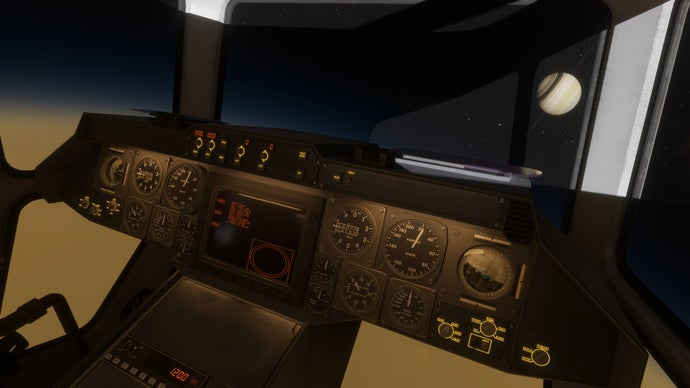
Space Hauler brings hardcore simulation design to space trading. Every button and switch in your ship functions as an actual control, eliminating the cosmetic interface bloat that plagues most space games. The cargo delivery sim positions itself around Saturn, emphasizing exploration and peaceful solitude rather than combat intensity.
The game targets players who want genuine spacecraft operation over arcade fantasy. Your cockpit demands real attention. Flipping switches, managing systems, adjusting trajectories—all require genuine input rather than menu selection. This design philosophy echoes the meticulous approach of hardcore sims like Kerbal Space Program and Elite Dangerous, but Space Hauler doubles down on functional authenticity.
The Saturn setting matters strategically. Rather than the overdone solar neighborhood around Earth and Mars, this location offers visual variety through Saturn's ring system and moon diversity. The game leverages this geography to create distinct trading routes and exploration zones that feel genuinely alien without resorting to fictional star systems.
The cargo delivery premise provides organic gameplay structure. You're not saving the galaxy or fighting pirates—you're hauling materials between stations and settlements. This foundation allows the game to focus on the relaxing rhythm of spaceflight itself. Take-off sequences, long-distance burns, docking procedures, and navigation become the entertainment rather than obstacles to overcome between combat encounters.
This approach fills a specific gap. While space games dominate indie and AAA releases, most chase action-heavy appeal or story spectacle. Space Hauler commits to the simulation layer, betting that players seeking peaceful cosmic exploration will embrace the operational complexity. The fully functional cockpit removes the boundary between role-playing as a hauler and actually operating one.
The indie development context suggests reasonable scope and focused design philosophy. Space Hauler knows its audience. It's not chasing mainstream appeal. It's building tools for space simulation enthusiasts who want their games to respect their intelligence and