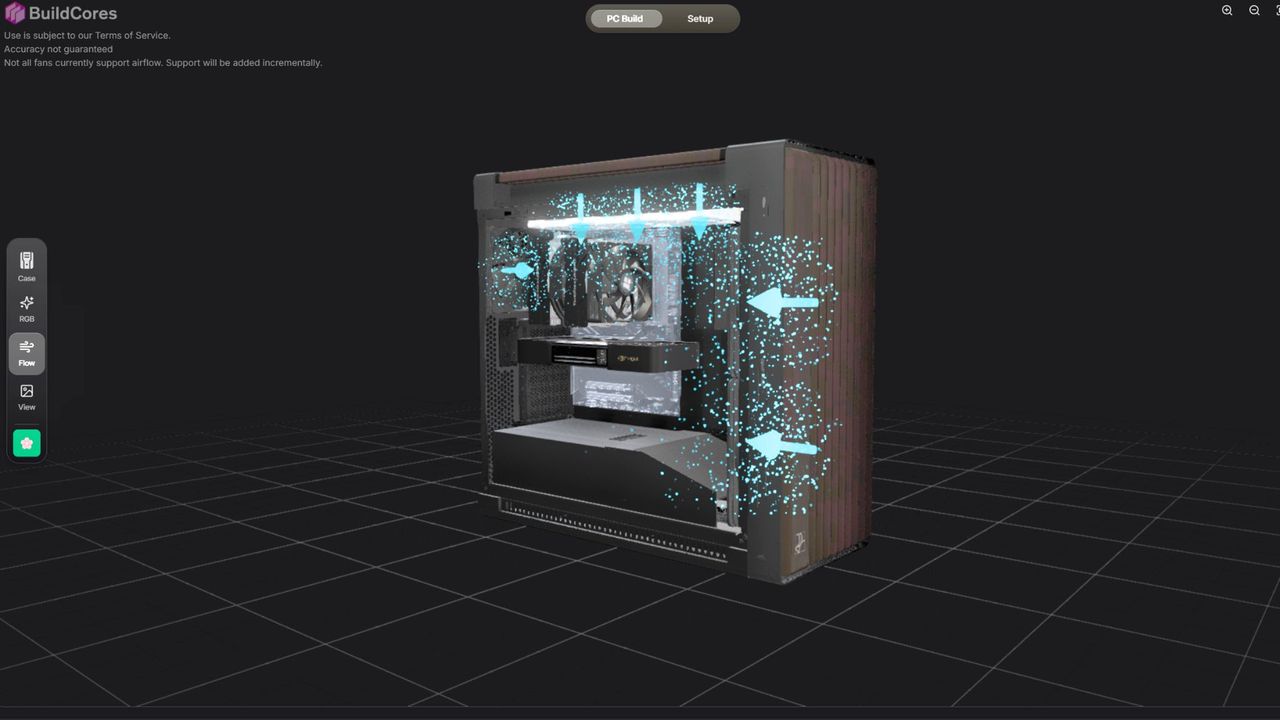
A PC enthusiast dropped $70,000 on a high-end gaming rig and used an innovative 3D visualization tool to expose a critical flaw: catastrophic airflow design. The builder configured fans to pull air inward rather than establish proper intake-exhaust balance, creating thermal chaos inside the case.
The discovery came courtesy of a part-picking website that renders PC configurations in 3D space, letting builders see airflow patterns before assembly. This visualization caught what would have been a costly mistake. A $70,000 system demands precision cooling. Improper airflow would throttle performance on components like CPUs and GPUs that cost thousands individually, while also reducing component lifespan.
High-end PC building has become increasingly technical. Flagship processors and graphics cards generate extreme heat. Water cooling loops, custom cases, and premium fans now anchor builds in this price range. Getting thermals wrong wastes the entire investment.
The 3D visualization tool represents a practical shift in PC building culture. Enthusiasts once relied on trial-and-error or forum advice. Now they can simulate performance issues before buying parts. This catches fan mounting errors, blocked vents, and incompatible radiator placements.
Proper airflow topology matters. Intake fans should concentrate on front or bottom mounting. Exhaust fans belong on rear and top. Mixing these up creates stagnant zones where hot air recirculates. High-end builds suffer most from this problem because components run hot enough that inefficient cooling triggers throttling or shutdown.
The builder's mistake, while humorous, highlights why visualization tools benefit the entire PC building community. Enthusiasts spending tens of thousands deserve safeguards against preventable errors. As custom PC complexity grows, tools that catch these mistakes before purchase save time, money, and frustration.
This incident underscores cooling's non-negotiable role in PC