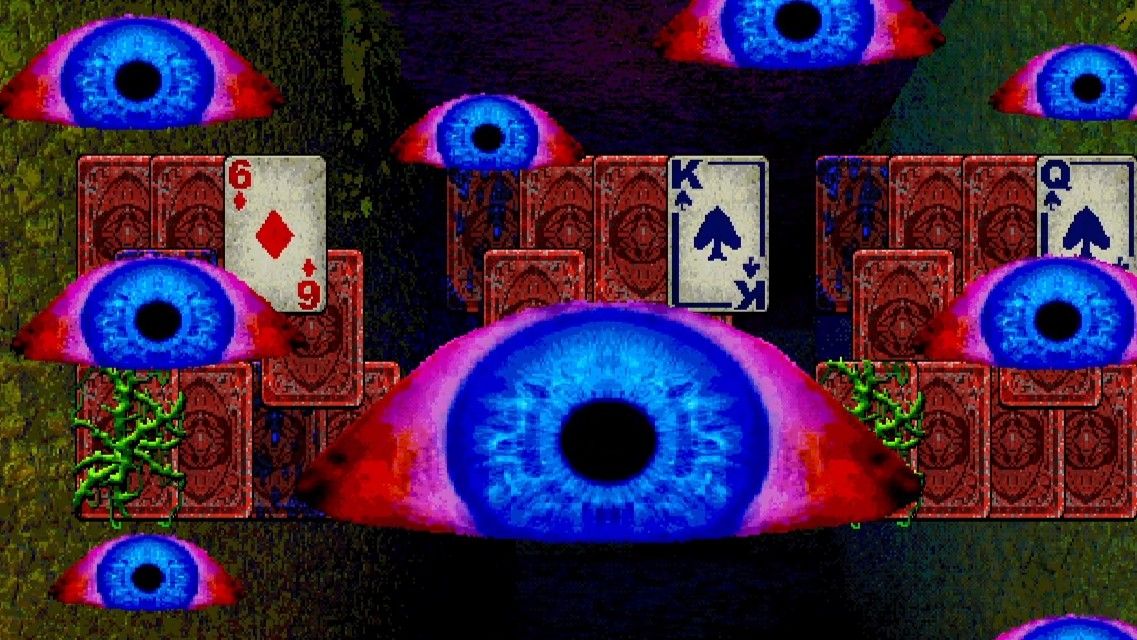
Forbidden Solitaire succeeds by fusing two distinct genres into one cohesive experience. The game layers psychological horror onto classic solitaire mechanics, creating something that feels fresh within Steam's crowded card game marketplace.
The core loop remains familiar. Players match cards and clear the tableau while pursuing objectives that unlock narrative progression. But developer Misfits Attic wraps this around a darkening story rooted in folk horror and dread. Each solitaire victory inches you closer to uncovering a mystery, with atmosphere intensifying through visual design and environmental storytelling rather than jump scares.
The comparison to Regency Solitaire and Home Safety Hotline tells the story. Regency Solitaire proved that card games could anchor engaging historical narratives. Home Safety Hotline demonstrated how horror could thrive in mundane interfaces and procedural interactions. Forbidden Solitaire borrows from both playbooks.
Steam's solitaire catalog explodes every quarter, most variants forgotten within weeks. Forbidden Solitaire distinguishes itself through intentional design choices. The horror elements never overshadow the core card mechanics. Difficulty scales appropriately so newcomers and solitaire veterans both find challenge. The narrative paces carefully, rewarding engagement without demanding constant attention to story beats between rounds.
Player reception has been strong. The game resonates with people who dismissed horror games as too visceral, and with solitaire fans seeking deeper engagement than standard digital adaptations.
This success signals something important about genre fusion. The trend of grafting narrative and atmosphere onto traditionally mechanical genres continues proving viable. Card games, roguelikes, and puzzle titles all benefit when developers respect their foundational systems while adding thematic layers. Forbidden Solitaire doesn't treat horror and solitaire as competing priorities. It treats them as complementary.
The game arrives at an ideal