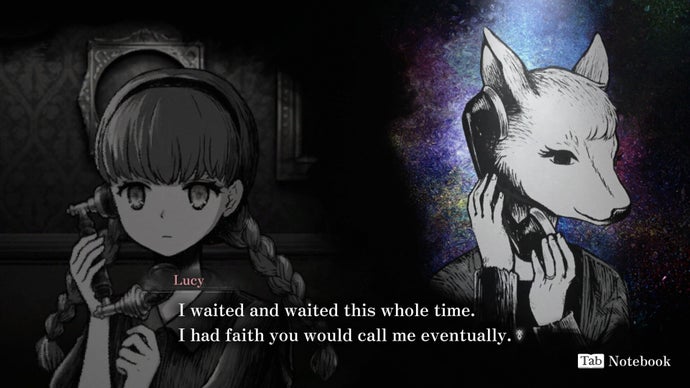
Schrödinger's Call, an eerie visual novel from an independent studio, tasks players with making phone calls to souls trapped in purgatory to explore themes of relationships, loss, and human connection. The game uses rotary dial phone mechanics as its core interaction method, creating an unconventional interface that reinforces the otherworldly setting. Players navigate conversations with lost souls, making narrative choices that shape their connections and uncover stories about the pain and joy embedded in human relationships.
The demo impressed critics with its presentation and emotional depth. A Rock Paper Shotgun reviewer spent ninety minutes with the preview build, describing it as a "powerfully presented adventure" that compelled continued engagement despite their initial skepticism toward visual novels. The game's fusion of phone call mechanics with narrative exploration creates a distinct experience within the visual novel genre, which typically relies on traditional dialogue trees and visual choices.
The premise taps into growing player interest in narrative-driven indie titles that experiment with unconventional mechanics. Games like What Remains of Edith Finch and Kentucky Route Zero demonstrated that players embrace experimental storytelling when paired with thematic cohesion. Schrödinger's Call appears to follow this trajectory by using its phone mechanic not as gimmickry but as a thematic anchor that mirrors the isolation and intimacy of long-distance connection.
The title references the quantum physics thought experiment, suggesting the game explores ambiguity around relationships. Whether connections exist in a state of simultaneous joy and pain, presence and absence, aligns with the purgatorial setting where souls exist between states of being.
Indie visual novels continue gaining mainstream attention. Schrödinger's Call positions itself as a unique entry in a crowded indie field by prioritizing mechanic-narrative integration over traditional dating sim tropes. Its focus on relationships as fundamentally complex rather than romance-driven broadens the visual novel's appeal beyond